
Everything Continues
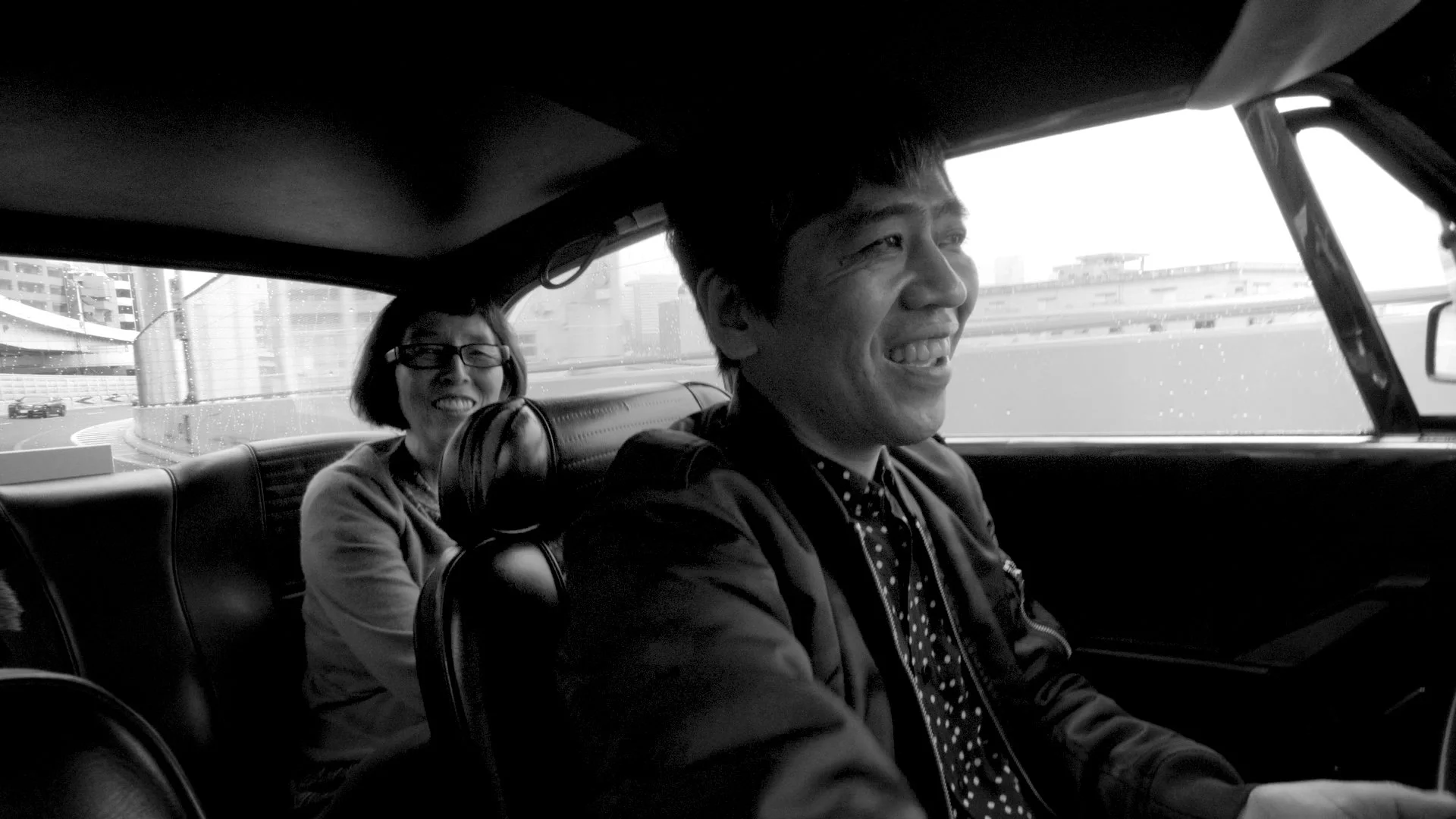
Image from www.bekalemoine.com/
In Tokyo Ride, a film by Bêka & Lemoine that follows architect Ryue Nishizawa as he drives through the city in his vintage Alfa Romeo Giulia, he speaks not in declarations but in fragments. The conversation drifts – from cars to cities, from Europe to Japan, from continent to island. What emerges is not a manifesto, but an atmosphere: architecture understood not as permanence, but as passing presence.
At one point, Nishizawa reflects on the difference between continent culture and island culture. On the continent, architecture accumulates. Buildings endure. History layers itself into stone and façade. Cities grow by preservation. Architecture behaves like a noun – solid, named, finished.
But on an island, especially in Japan, architecture rarely settles into permanence. Earthquakes, fires, war, economic cycles – buildings are constantly rebuilt. Structures are replaced rather than preserved. The city renews itself with startling frequency. Architecture behaves more like a verb – happening rather than fixed.
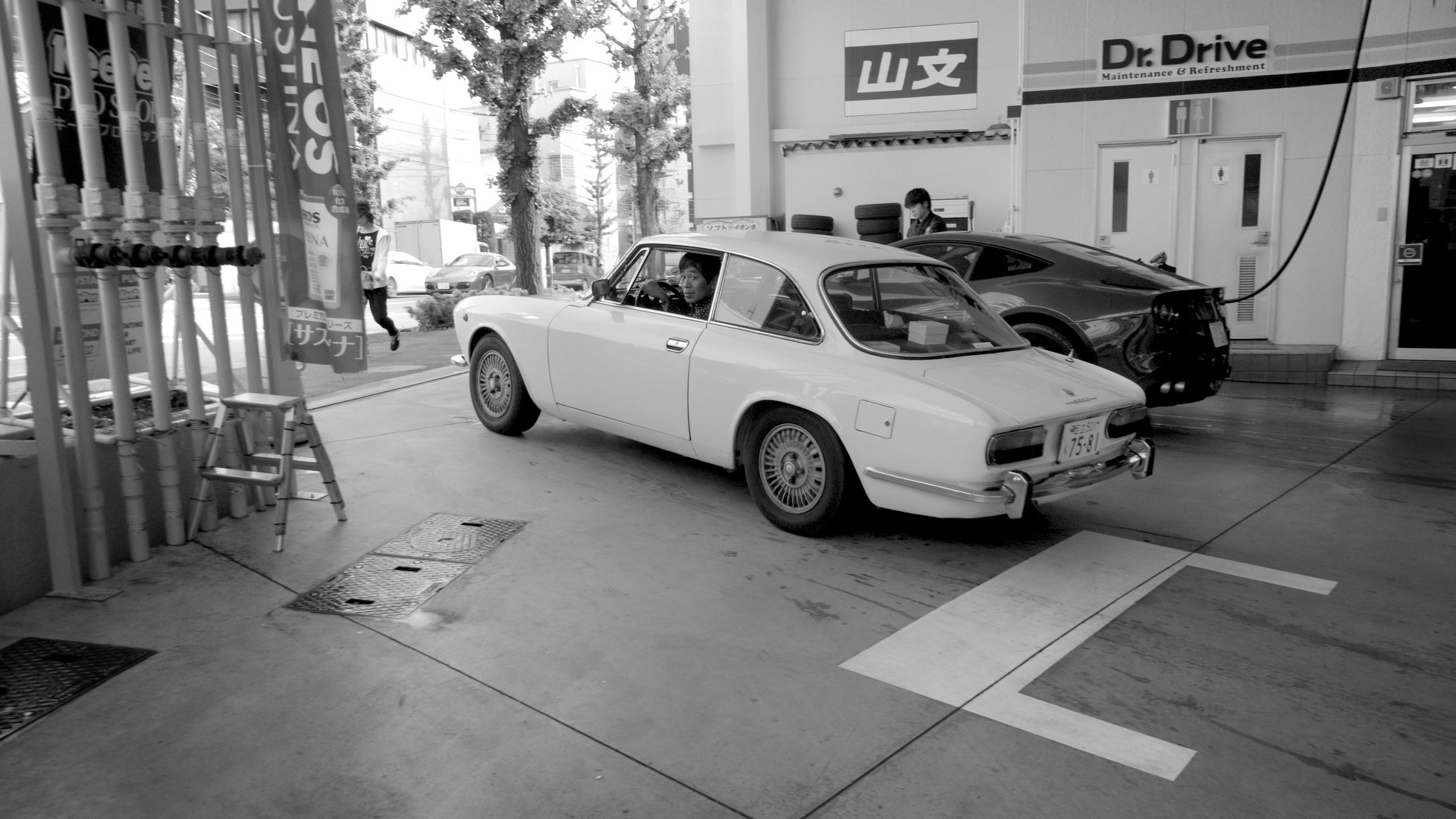
Image from www.bekalemoine.com/
This distinction is not framed as criticism. It is observation. The continent builds to remember. The island builds to continue.
Impermanence, in this context, is not loss. It is rhythm.
Tokyo is a city that does not cling to its past in visible layers. Unlike Rome or Paris, its age is not immediately legible. Buildings from the 1970s stand beside those from last year. Small houses disappear and reappear in altered form. Nothing feels entirely stable, yet nothing feels chaotic. The city is alive in its replacement.
And yet, paradoxically, this constant rebuilding does not erase memory. It relocates it.
Memory in Tokyo is not embedded in stone walls that survive centuries. It lives in practice – in the repetition of rebuilding, in craft knowledge passed forward, in urban patterns that subtly persist even as structures change. Impermanence becomes the very condition of continuity.
There is something deeply cinematic about this idea. The film itself mirrors the city’s logic. It does not present a linear argument. It drifts. It wanders. The car becomes a moving room – a temporary architecture inside a constantly shifting one. Through the windshield, buildings pass by. None demand monumentality. All are simply there, for now.
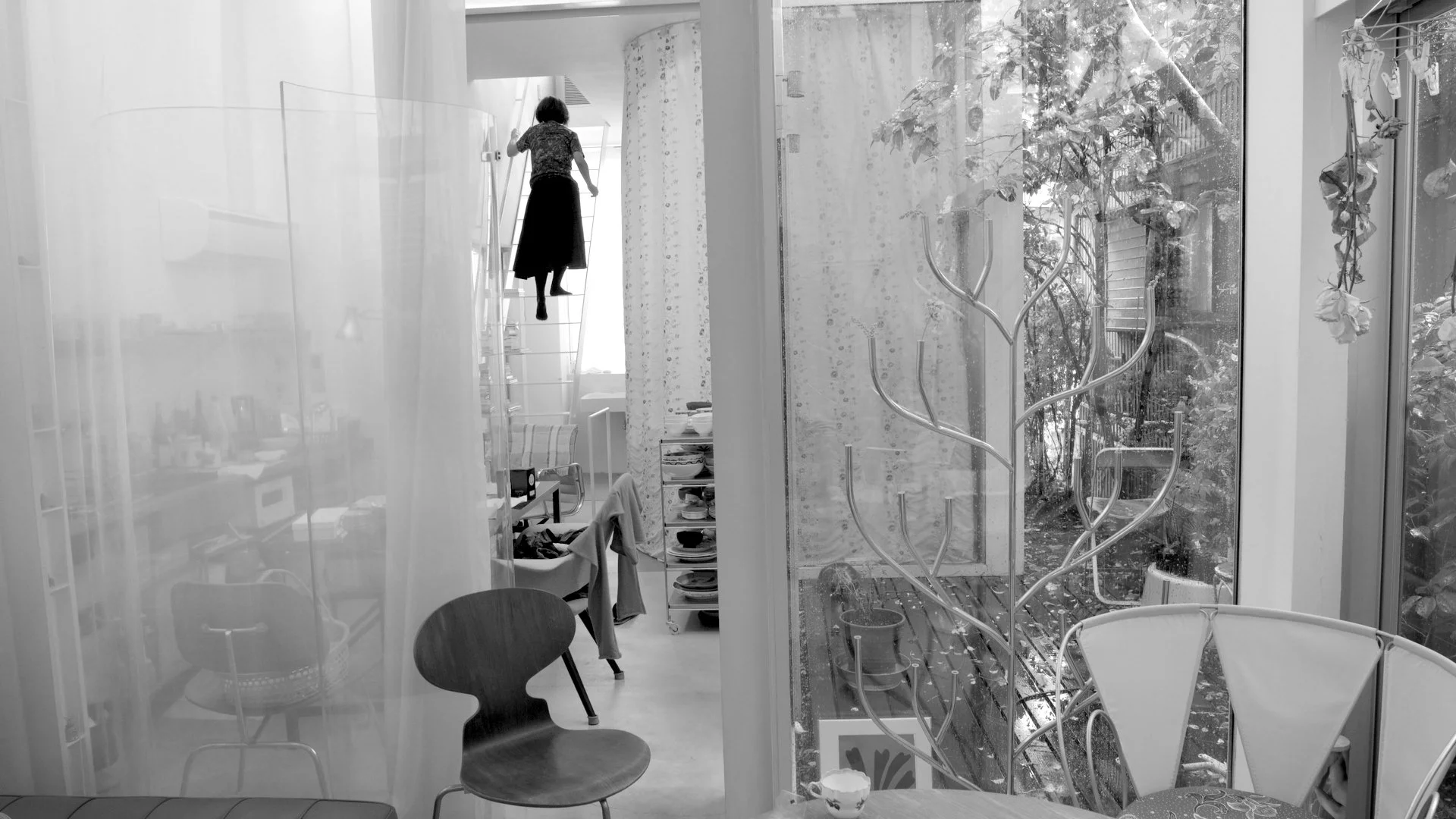
Image from www.bekalemoine.com/
Perhaps impermanence is easier to accept when movement is unhurried.
The Giulia does not rush through Tokyo. It glides. The city unfolds slowly enough to be observed, yet never long enough to be possessed. Surfaces do not flash past; they reveal themselves gently – concrete softened by afternoon light, narrow homes tucked between larger structures, trees leaning into narrow streets. Slow riding allows architecture to appear as something lived rather than conquered.
In slowness, nothing insists on permanence. Everything feels provisional – and therefore tender.
The city is not an object to capture but an experience to accompany. Architecture becomes time felt rather than time measured.
In this sense, impermanence is not fragility. It is flexibility.
Where permanence resists change, impermanence accommodates it. Where monumentality asserts itself, lightness adapts. In island culture, survival may depend less on endurance and more on responsiveness.
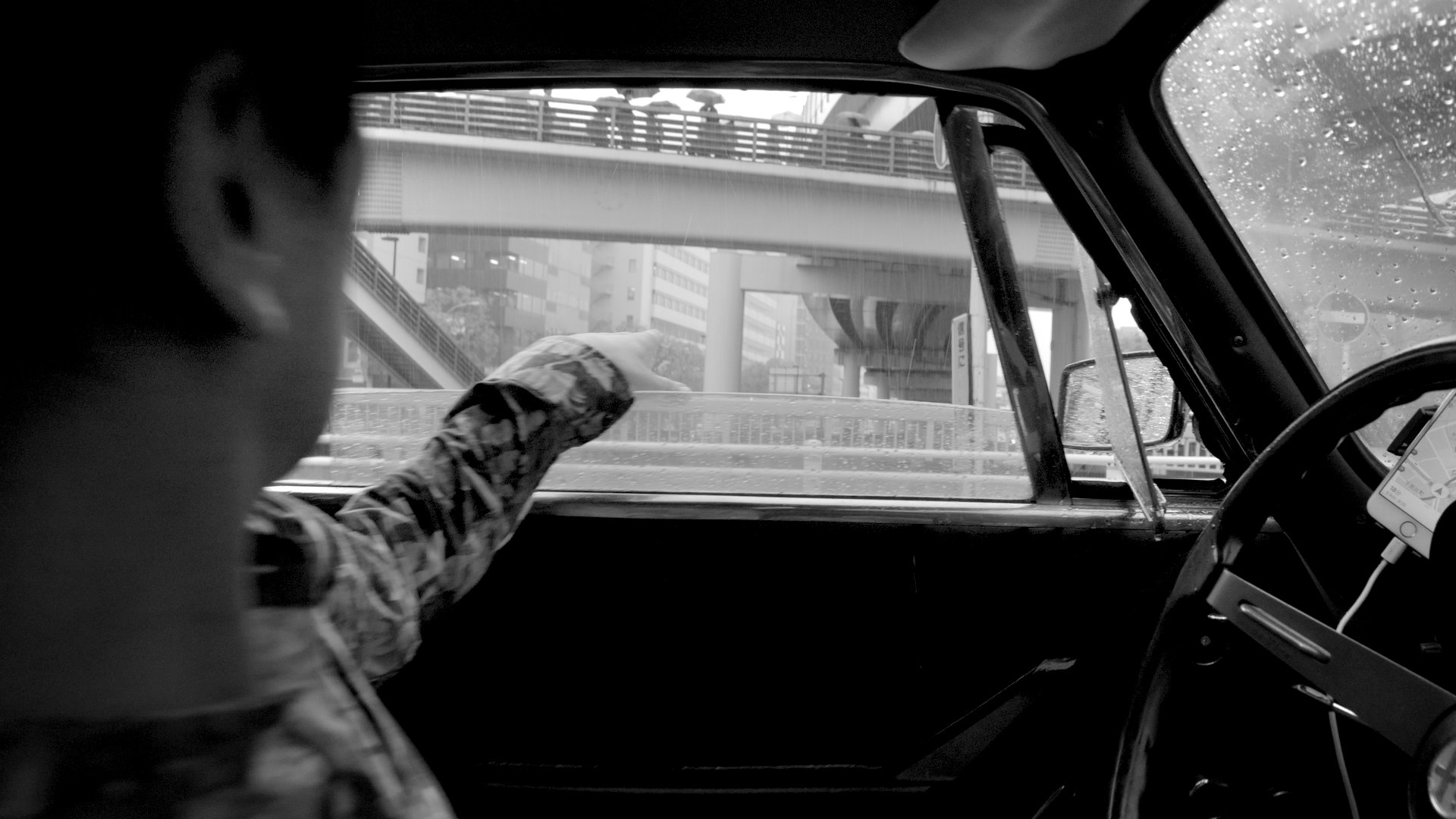
Image from www.bekalemoine.com/
This idea resonates beyond architecture. It suggests a different relationship with time itself. The continent accumulates. The island renews. One measures legacy through duration; the other through recurrence.
To live within impermanence is to accept that things will end – and begin again. It is to understand that rebuilding is not failure. It is part of the cycle.
In Tokyo Ride, Nishizawa does not speak of impermanence with melancholy. He speaks of it almost casually, as if it were simply the air one breathes. Perhaps that is the quiet lesson of the film: impermanence need not be dramatic. It can be ordinary.
The Giulia continues forward, unhurried. The buildings continue to shift. The city continues to renew itself.
Nothing stays.
Everything continues.
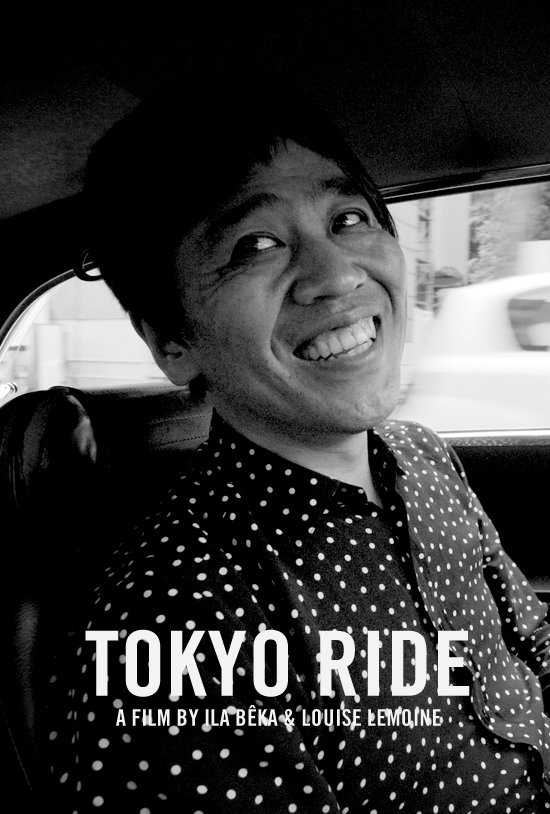
Image from www.bekalemoine.com/
If you enjoy architecture, vintage cars, and Tokyo, I highly recommend this film.
Watch it on Vimeo on demand
For a deeper exploration of impermanence, discover Abstracts Issue #01 – Impermanence.
Text by ANATOMY OF THINGS